
The Journal · Guidance & Stories
How Much Does an Engagement Ring Cost?
Ask me that question and my honest first thought is: how long is a piece of string?
Not because it's unanswerable, but because the question is pointing in the wrong direction. Price is the number on the tag. What matters is what the number is paying for. Two rings at the same price can be completely different objects, made in completely different ways, by completely different people. Understanding what goes into a ring's cost is the only way to spend your money well.
Here's what actually drives it.
The Honest Answer
The cost of an engagement ring in the UK ranges from a few hundred pounds to many thousands. But price alone tells you very little. What you're paying for is a combination of metal, stones, craftsmanship, and design - and whether the ring was made for you specifically or already existed before you walked in.
To give a specific sense of the range: a Cannelé Petit diamond halo from my collection in platinum starts at £2,550. At the other end, a Satellite Ruby with a 1.10ct ruby runs to £16,000 in 18ct gold. What sits between those two numbers - and why - is what the rest of this piece explains.
A useful test: before you look at a price, ask what went into making it.
What Drives the Cost of an Engagement Ring?

The Metal
Gold and platinum are both sitting close to recent highs. That matters because precious metal weight is one of the first things built into the price of an engagement ring. Even silver has risen steadily over recent years. The weight of metal in a ring has always been a factor in its price, but that factor is more significant today than it was a few years ago.
18ct golds are currently more expensive than platinum per gramme - significantly - which is not what many buyers expect to hear.
For daily wear, platinum and 18ct gold remain the right choices. Platinum is the more durable of the two: it holds stones securely over decades, and its natural colour never requires replating. White gold needs periodic rhodium plating as the base metal shows through over time - worth factoring in when you're choosing.

The Stones: Diamonds, Lab-Grown, and the Rise of Colour
Natural diamonds have dropped in price over the past few years. Lab-grown competition has done that. In general, a GIA-graded natural diamond costs less today than it did in 2020, which means your money goes further on a natural stone than it once did.
Lab-grown diamonds are ultimately made from the same material as natural ones. They're not strictly speaking an imitation. The main difference is origin: natural diamonds form over billions of years underground; lab-grown ones are created in a controlled environment in weeks. Both carry the same optical properties, the same hardness, the same brilliance.
If you want a larger stone within a set budget, lab-grown is my honest recommendation. To the eye, a well-cut 1ct lab-grown diamond can look identical to a 1ct natural diamond. The difference that matters to some buyers is provenance: the natural stone has a story that the lab-grown one doesn't. Whether that matters to you is your call, not mine. Both are real diamonds.
Coloured gemstones are moving in the opposite direction. Fine rubies, sapphires, and high-quality coloured stones are rising in price and rising in demand. Red stones in particular - deep, saturated rubies - have become increasingly prized. The finest natural coloured gems are genuinely scarce, and their prices reflect that.

The Craftsmanship
This is the part most buyers never see - and the part that makes the most lasting difference in what they own.
Two rings can look almost identical on a website and cost very different amounts. One was finished in a large workshop abroad, set quickly, polished fast, and shipped. The other was set stone by stone under a microscope in London by a craftsman who has spent decades doing this work.
Put both rings side by side and the difference is there. The claws are more regular on the second ring. The edges that should be flat are still flat - not rounded off from over-polishing. The stones sit without movement. The finish is crisp at every angle. That precision doesn't happen by accident. It happens because someone took the time to make it right.
Every stone in my pieces is set by hand in London where my master setter works under a microscope. Every stone placed this way takes longer than one set quickly in a production environment. It costs more. What you get in return is a ring with no compromise in the setting - every stone held exactly as I designed it, with the structural integrity to stay that way.

The Design
An exceptional design costs money before anyone touches the metal. That's often the part of a ring's price that's hardest to explain, because you can't see the work that went into it.
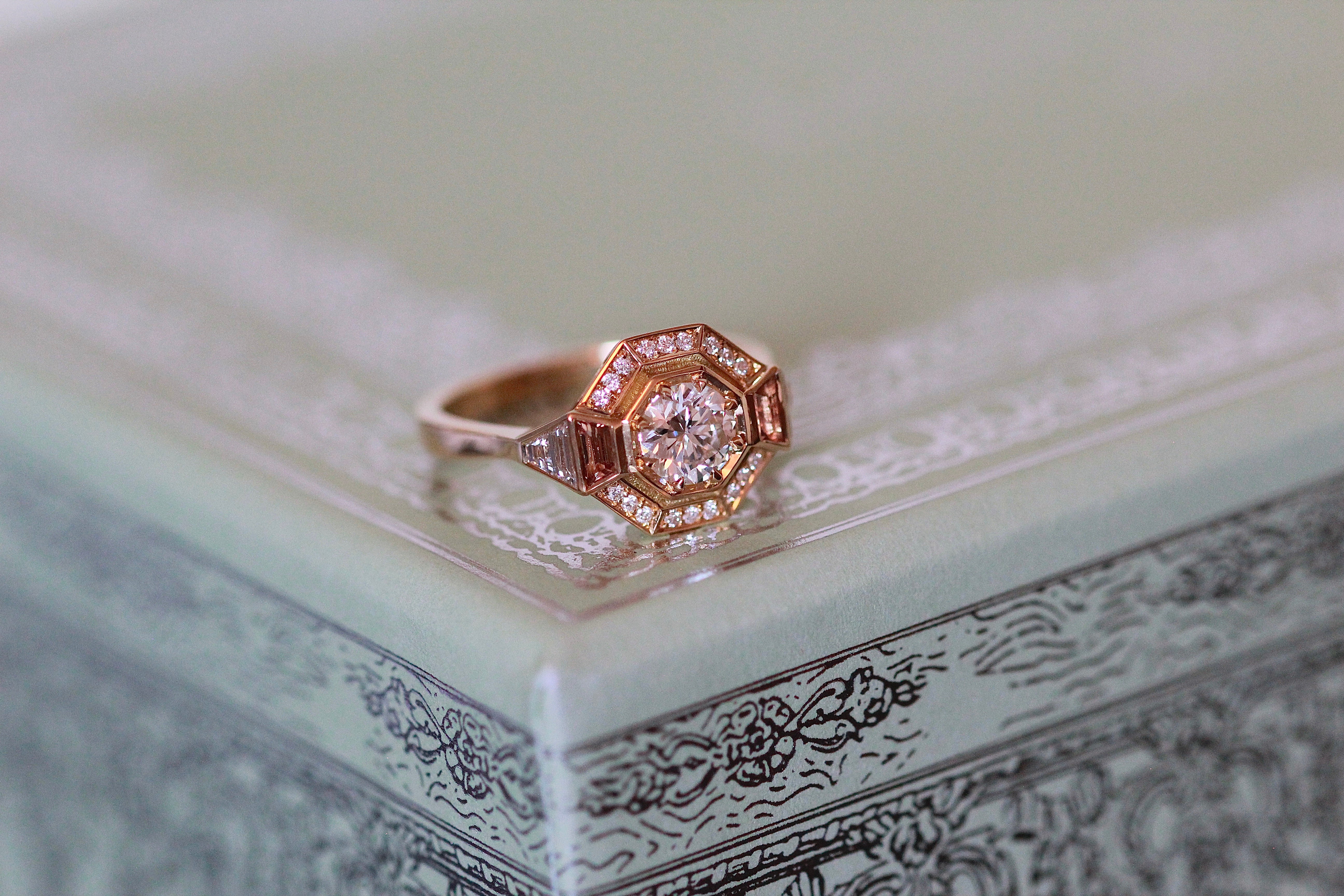
The Asteria is a clear example. The exterior carries a lattice of stonework that curves around the entire setting, hand-engraved and set with a precision that only a handful of craftspeople in the UK can execute. The discipline required combines stone setting with deep engraving - two distinct specialisms that have to work together, accurately, across a curved surface. Getting it right takes hours per ring.
Behind the finished piece sits something less visible: the months I spent developing it. Samples made and rejected. Resin prototypes in different proportions. The same design problem looked at from new angles, reworked, and refined. That research and development has to be recouped somewhere. It is - in the price of the ring.
That cost isn't a premium on top of the work. It's the cost of genuinely original design, thought through properly and executed at the highest level available. A ring that's been manufactured to the same specification for twenty years doesn't carry that cost. It also doesn't look like anything else.
Made to Order vs a Commission
There's a meaningful difference between buying a ring from my collection and asking me to create something from scratch.
A made-to-order ring - an Asteria, a Cannelé, an Empress - is a design that already exists. I make it in your chosen metal, to your ring size, with the stone you select. You get years of design thinking applied to a piece made specifically for you. The collection is the result of work already done. The ring, when it arrives, is new. Nothing is pulled from a shelf.
A fully commissioned piece goes further. I work with you directly to understand what you want the ring to express - not just aesthetically, but personally. What it's for. Who it's for. What it should express that a collection piece wouldn't. What I create is a ring no other person owns, and no other person will. That uniqueness has real value. It's priced to reflect it.
Neither approach is right for every buyer. The collection offers design at its best, already resolved, available to order now. A commission offers something that didn't exist before. Both are made in London.
So, What Does an Engagement Ring Cost?
The price reflects what went into making it.
A ring with a natural diamond or a fine coloured stone, set in platinum by hand in London, designed by someone who spent months resolving it and years developing the skills to make it properly - that costs more than one that didn't have those things. Not arbitrarily more. Justifiably more.
The question worth asking before you look at a price is: what am I buying? A ring that will look the same in twenty years, that your partner will want to keep wearing, that has real craft behind every detail - that's what the price is paying for.

To give you a sense of the range
A Cannelé Diamond Halo ring - one of my most recognised designs, a brilliant cut diamond in a precisely set halo, made in platinum - starts from £2,550 with a 0.15ct diamond, and £3,950 at 0.50ct. That's a handmade ring in platinum, set in London, from a British designer. Not from a factory. Not from a high street chain.
The Chapiteau de Diamants in platinum starts from £4,300 with a 0.33ct brilliant-cut diamond. The Asteria - with its signature hand-engraved stellate lattice - starts from around £5,050 in platinum for a coloured stone version, and from £6,150 for a diamond at 0.45ct.
At the upper end, the Satellite - a two-stone design, one of the most distinctive things I make - ranges from approximately £5,950 to £16,000, depending on metal and the stone combination.
These are the numbers for pieces made correctly in London. That's what they reflect.
Explore the full collection or ask me about a commission.
Frequently Asked Questions
How much does an engagement ring cost in the UK?
Engagement ring prices in the UK range from a few hundred pounds to many thousands, depending on the metal, stones, level of craftsmanship, and whether the ring is from an existing collection or designed from scratch. The price reflects what went into making the ring - and two rings at the same price point can represent very different standards of making.
Should I choose a natural or lab-grown diamond?
Both are real options. Natural diamonds have dropped in price recently due to lab-grown competition, so your budget goes further than it once did. Lab-grown diamonds are chemically identical to natural ones - the only difference is origin. Natural stones formed over billions of years underground; lab-grown ones are produced in a controlled environment. Some buyers value the provenance of a natural stone; others prioritise size or budget. Either choice results in a real diamond.
Why are coloured gemstone engagement rings becoming more expensive?
High-quality natural coloured stones - fine rubies, sapphires, and rarer gems - are rising in price and rising in demand. The finest natural coloured gems are genuinely scarce, and that scarcity is reflected in what they cost. As interest in deeply saturated coloured stones has grown, the finest examples have become significantly more sought after.
Is platinum a good choice for an engagement ring?
For a ring worn every day for decades, platinum is hard to beat. It's denser than gold, depending on design can hold stones securely over time, and its natural colour never needs replating. White gold requires periodic rhodium plating as the base metal shows through with wear. Right now, platinum is also priced more accessibly than gold - which makes it an even stronger choice for anyone weighing up their options.
What's the difference between a made-to-order and a commissioned ring?
A made-to-order ring comes from an established collection - the design exists, and I make it in your chosen metal, size, and stone. A commissioned ring is designed from scratch: I work with you to create a piece that's never been made before, built around what you want it to express. A commission takes longer and costs more. The result is a ring no other person owns.
How much should I spend on an engagement ring?
There's no universal rule - the old "three months' salary" idea was invented by a diamond company and has no basis in what makes a ring meaningful. A more useful question is: what do I want this ring to be in twenty years? If the answer involves real craftsmanship, a well-sourced stone, and a design that still holds up, then the budget should reflect that. What matters is understanding what you're buying, not hitting a particular number.
Does the quality of stone setting affect how long the ring lasts?
Significantly. Stones set under a microscope, with correctly sized and positioned claws, hold better over decades than those set quickly in a production environment. Over-polished claws become thin over time, losing their grip. Every stone in my pieces is set by hand in London under a microscope, ensuring each one sits exactly as I designed it - and stays there.